Drip Irrigation vs. Sprinkler Irrigation: Which System Is Right for You?
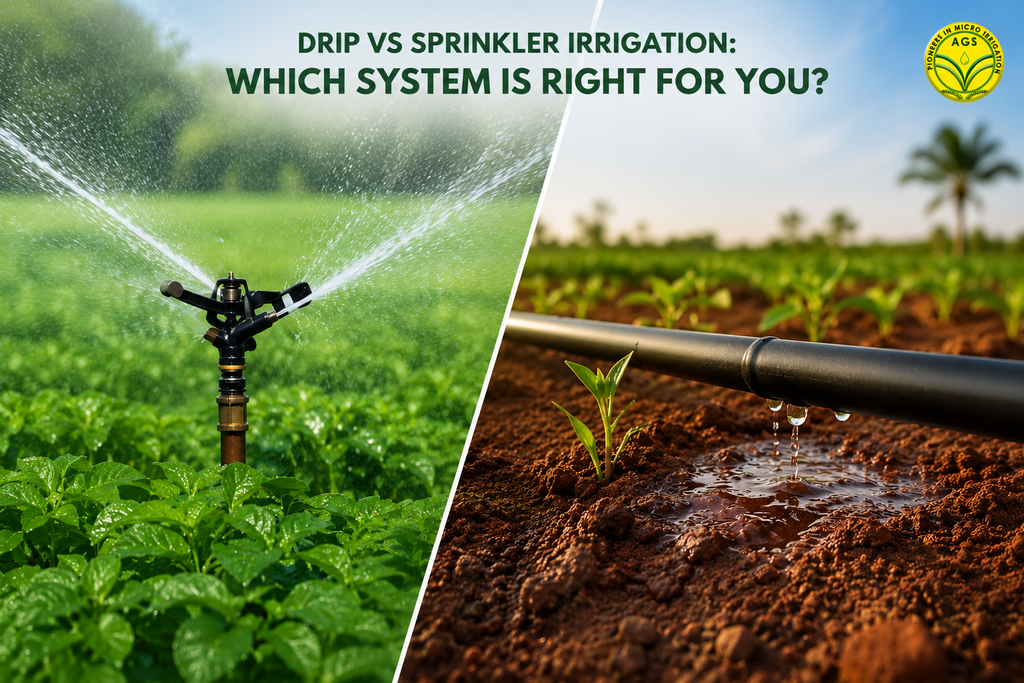
Drip irrigation and sprinkler irrigation are the two dominant precision irrigation methods in India — and the debate between them is one of the most common questions we hear from farmers and landscapers alike. The honest answer: neither is universally better. The right choice depends on your crop type, soil, terrain, water source, and budget.
This guide gives you a clear, side-by-side comparison so you can make a confident decision before you invest.
Quick Comparison
| Factor | Drip Irrigation | Sprinkler Irrigation |
|---|---|---|
| Water efficiency | 90–95% | 75–85% |
| Best for | Row crops, orchards, vegetables | Lawns, wheat, groundnut, nurseries |
| Terrain suitability | Flat to undulating | Any terrain |
| Upfront cost | Moderate–High | Moderate |
| Clogging risk | Higher (emitters) | Lower |
| Fertigation capability | Excellent | Limited |
| Wind sensitivity | None | High |
When Drip Irrigation Wins
Drip delivers water directly to the root zone through emitters, minimising evaporation and surface runoff. It's the clear choice when:
- You're growing vegetables, fruits, or orchards where leaf wetness causes disease
- Your water source is limited or expensive (borewell, tanker)
- You want to fertigate — deliver fertiliser through the irrigation line
- You're on a government subsidy scheme (drip systems qualify under PMKSY in most states)
- Your soil is sandy and water moves downward quickly
Explore our drip irrigation systems — from inline drip tape for row crops to pressure-compensating emitters for orchards on slopes.
When Sprinkler Irrigation Wins
Sprinklers distribute water over a wide area, mimicking rainfall. They're the better fit when:
- You're growing field crops like wheat, maize, or groundnut where full canopy coverage is needed
- You need to germinate seeds — drip can't wet the surface uniformly
- You're irrigating lawns, sports fields, or nurseries
- Your terrain is flat and wind speeds are low
- You want a simpler installation with fewer components
Browse our sprinkler irrigation systems and sprinkler nozzles for residential and agricultural use.
The Hybrid Approach
Many farms in India use both: drip for high-value crops in one block, sprinklers for field crops or germination beds in another. With an automation system, you can schedule and control both from a single controller — reducing labour and ensuring consistent watering even when you're off-site.
Cost Comparison (Approximate, India)
| System | Installation Cost per Acre |
|---|---|
| Drip irrigation | ₹35,000–₹80,000 |
| Sprinkler irrigation | ₹25,000–₹55,000 |
Subsidy under PMKSY can cover 45–55% of costs for eligible farmers. Check with your local agriculture department.
Also read: What Is the Cost of a Drip Irrigation System Per Acre in India? — our detailed cost breakdown article.
Conclusion
If water efficiency and fertigation are priorities, drip is the answer. If you need full-area coverage for field crops or germination, sprinklers deliver. For most serious growers, a combination of both — managed through automation — gives the best return on investment.