How to Choose PVC Pipes for Irrigation: A Complete Buyer's Guide
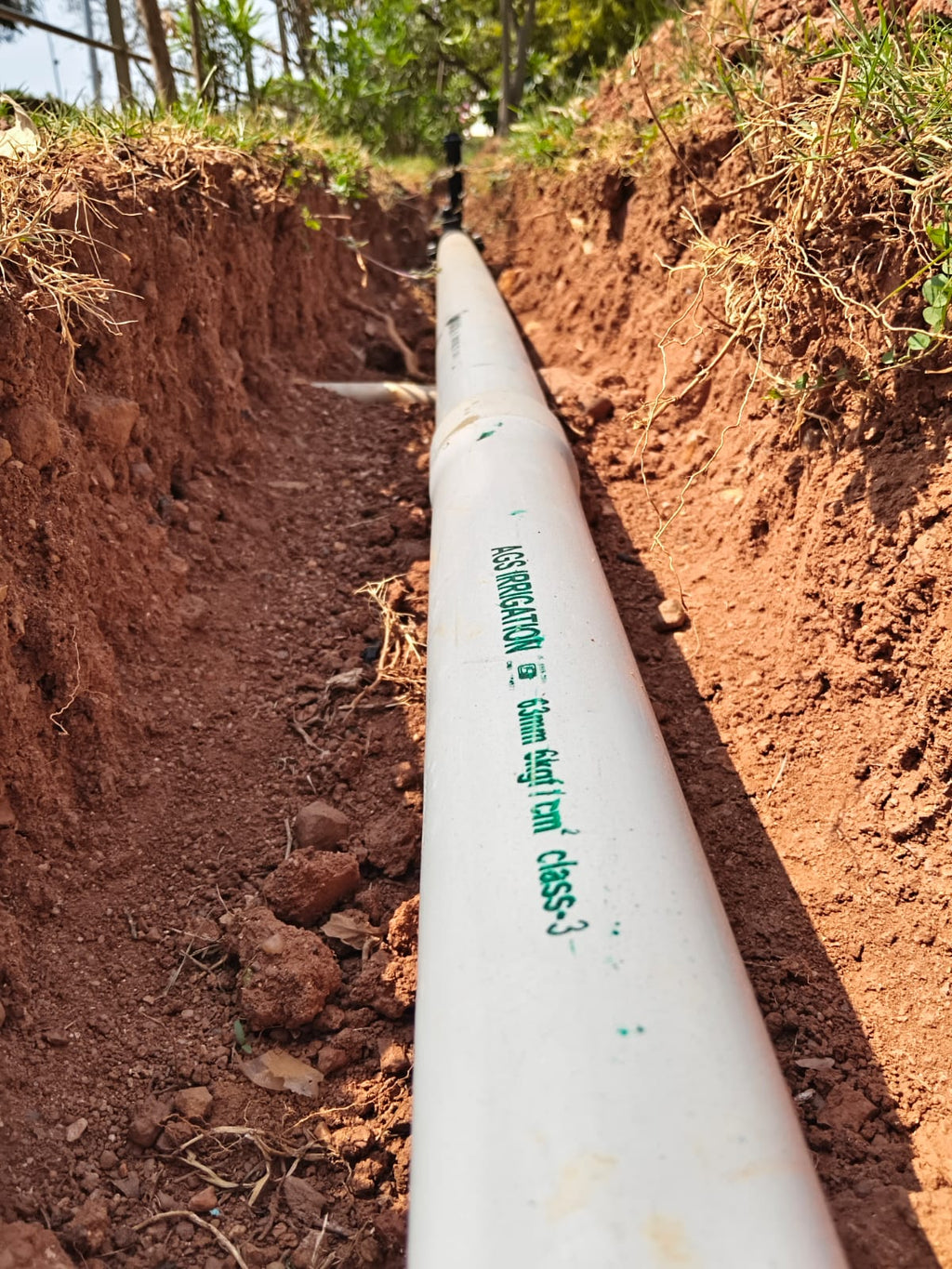
PVC pipes are the backbone of any irrigation system — but walk into a hardware store or browse online, and you'll find dozens of grades, diameters, and pressure ratings with no clear guidance on which one is right for your farm, garden, or landscape. Choosing the wrong pipe means leaks, pressure loss, and costly replacements within a single season.
This guide cuts through the confusion. Whether you're setting up a drip system for one acre or a mainline network for a large farm, here's exactly what to look for.
1. Understand the Two Main PVC Pipe Types
- uPVC (Unplasticised PVC): Rigid, high-pressure rated, UV-resistant. Ideal for mainlines and sub-mainlines that carry water from the source to the field.
- LDPE/HDPE laterals: Flexible, used for drip lines and emitter rows. Often confused with PVC but a separate category.
For irrigation mainlines in India, uPVC conforming to IS 4985 is the standard to look for. Always check for the ISI mark.
2. Pressure Rating (Class) — The Most Important Spec
PVC pipes are sold in pressure classes. The higher the class, the thicker the wall and the higher the working pressure it can handle.
| Class | Working Pressure | Typical Use |
|---|---|---|
| Class 2 | 2.5 kg/cm² | Gravity-fed systems, flat terrain |
| Class 4 | 4 kg/cm² | Pump-fed drip/sprinkler mainlines |
| Class 6 | 6 kg/cm² | High-pressure sprinkler systems |
Rule of thumb: Match the pipe class to your pump's operating pressure, with at least 20% headroom.
3. Diameter Selection
Pipe diameter determines flow capacity. Undersizing causes pressure drop; oversizing wastes money.
- Main supply line: 63 mm–110 mm depending on total flow rate
- Sub-main: 40 mm–63 mm
- Lateral lines (drip): 12 mm–20 mm inline drip tubing
Use a simple flow velocity calculation: keep velocity below 1.5 m/s in mainlines to avoid water hammer.
4. Fittings Matter as Much as Pipes
A pipe is only as reliable as its joints. Look for:
- Solvent-welded fittings for permanent mainline connections
- Compression fittings for drip laterals — tool-free and field-repairable
- Threaded offtakes where you need to connect filters, valves, or pressure gauges
Browse our full range of PVC pipes & fittings and irrigation pipes — all ISI-marked and sourced for Indian field conditions.
5. Common Mistakes to Avoid
- Buying on price alone: Thin-walled, off-brand pipes fail under pump pressure. Always verify the IS standard.
- Ignoring UV exposure: Pipes laid above ground must be UV-stabilised or sheathed.
- Mismatched fittings: Mixing brands can cause fitting failures at joints. Stick to one system.
Conclusion
The right PVC pipe for irrigation comes down to three things: the correct pressure class for your pump, the right diameter for your flow rate, and ISI-certified quality you can trust in the field. Get these right and your mainline will outlast your pump.
-
Posted in
buying guide, drip irrigation, irrigation, mainline, PVC pipes